
Pain is our body’s way of getting our attention. It serves as a signal that something needs to be addressed, whether it’s a minor strain, an injury, or an ongoing issue affecting how the body functions. While most people are familiar with pain in general, not everyone understands the difference between acute pain and chronic pain.
Knowing how these two types of pain differ can help you better understand what your body may be telling you and when it may be time to seek additional support.
What Is Acute Pain?
Acute pain is something we all experience at some point – pain that comes on suddenly, usually because of a specific event or injury. A sprained ankle, a pulled muscle, or soreness after an unusually active weekend are common examples.
In many cases, acute pain serves a protective purpose. It encourages you to slow down, avoid further injury, and allow the body time to recover. As healing occurs, the pain usually improves and eventually goes away.
Acute pain can range from mild to severe, but it is generally temporary. Depending on the cause of the pain, it will usually resolve within days or weeks, rather than lingering indefinitely.
What Is Chronic Pain?
Chronic pain is different because it persists over a longer period of time. While definitions vary, pain that lasts for several months or longer is often considered chronic. Sometimes it begins with an injury that never seems to be fully resolved. In other cases, it develops gradually without a clear cause.
For those with chronic pain, the impact goes beyond just physical comfort. It can cause problems with sleep, energy, and mood, and it can negatively affect quality of life. Many people end up changing how they move and participate in activities they once enjoyed.
Over time, a body with chronic pain will develop compensation patterns that cause more problems, like tight muscles and changes in posture. Ultimately, this makes movement less efficient and places more stress on the spine and joints.
Why Spinal Health Matters
With both acute and chronic pain, spinal function will play a large role in how the body moves and its response to stress. Restricted motion and poor posture often cause pain, and spinal misalignments can be an underlying issue, too.
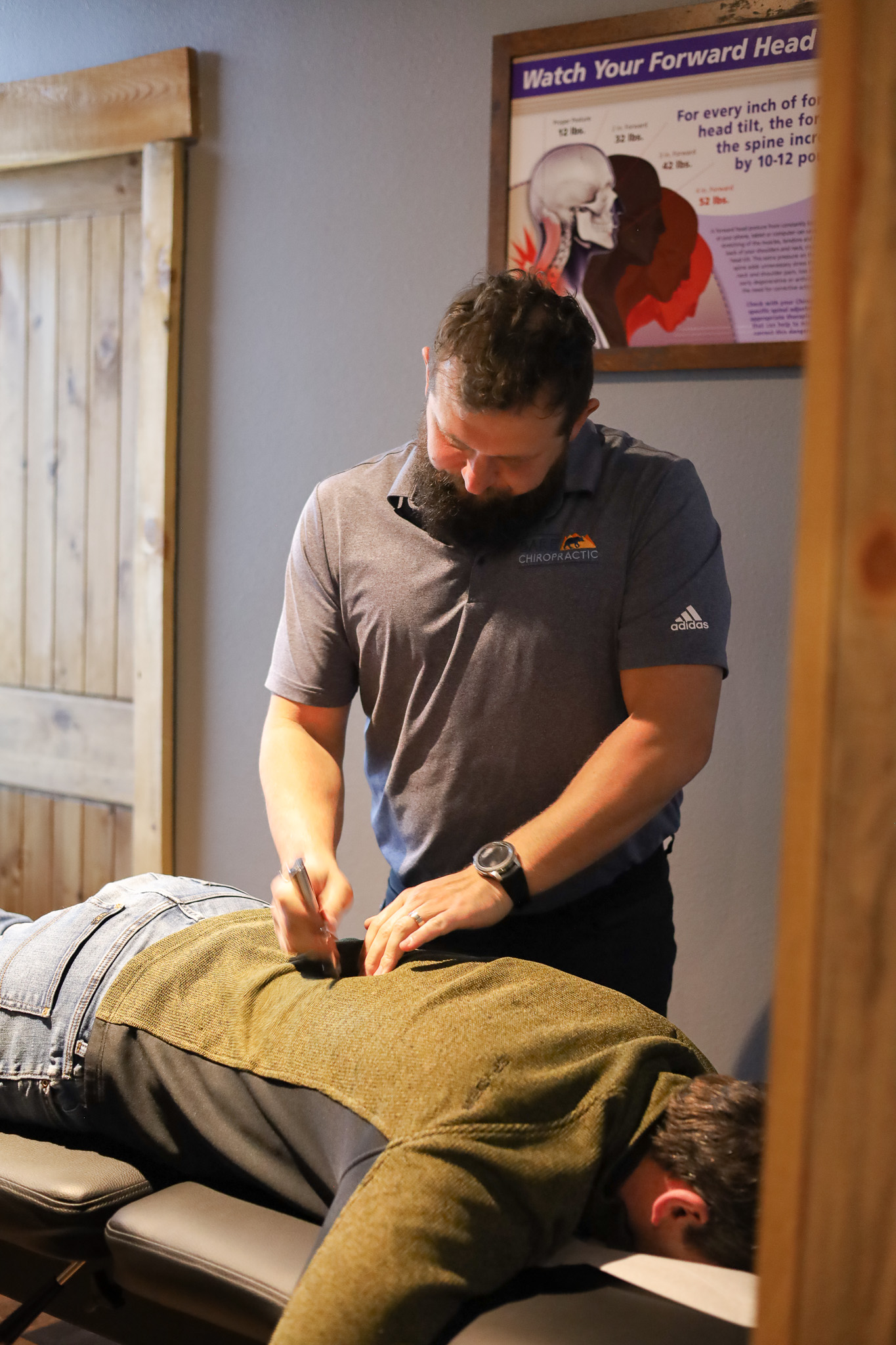
Dr. Thomas Keogh works with individuals experiencing a variety of movement and mobility challenges. A Billings chiropractic evaluation can help identify areas where the spine and joints may not be functioning as efficiently as they should.
Chiropractic adjustments are designed to improve joint motion and support proper alignment when the spine needs help. When the body can move naturally, it can better handle stress and avoid pain. You may be surprised by how significantly small movement patterns and habits impact how you feel daily.
Hear What Your Body Is Saying
At Bare Chiropractic, we focus on helping individuals improve movement, support spinal health, and maintain an active lifestyle. Dr. Thomas Keogh and our Billings chiropractic team are committed to helping you function at your best. Contact us today to schedule your first visit!
Sources
Cramer, H., Mehling, W.E., Saha, F.J., Dobos, G., Lauche, R. “Postural awareness and its relation to pain: validation of an innovative instrument measuring awareness of body posture in patients with chronic pain.” BMC Musculoskeletal Disorders. 2018 Apr 6; 19: 109. https://pmc.ncbi.nlm.nih.gov/articles/PMC5889545/
Grichnik, K.P., Ferrante, F.M. “The difference between acute and chronic pain.” The Mount Sinai Journal of Medicine, New York, 1991 May; 58 (3): 217-20. https://pubmed.ncbi.nlm.nih.gov/1875958/