
When it comes to back problems, a lot of people haven’t heard of foraminal stenosis until it comes up as a potential diagnosis. While the name may be unfamiliar, the condition is relatively common, particularly as people get older.
Foraminal stenosis happens when the foramina, small openings along the spine, narrow. These openings are meant to allow nerves to travel from the spinal cord to the rest of the body, but when the space is smaller, they can become irritated or compressed.
If you are suffering from this, here are three things a Billings chiropractor wants you to know.
1. Symptoms Can Extend Beyond the Spine
Most people assume that spinal conditions only cause pain in the back and neck, but the spine connects the entire body. With conditions like foraminal stenosis, the symptoms can travel anywhere from your fingers to your toes, depending on which nerves are irritated.
Those symptoms can be numbness and tingling, weakness, or a burning sensation that comes and goes, and they may happen all the time or only during certain activities.
The exact location of symptoms often depends on where the narrowing is occurring. When foraminal stenosis is in the neck, it’s more likely to impact the shoulders and arms; however, narrowing in the lower back usually affects the legs and feet.
2. Posture and Movement Matter
Foraminal stenosis comes from structural changes, but the way it shows up in your body can sometimes be changed by your habits. Poor posture or sitting for long periods places stress on the spine and the tissues around it, which can make any spinal issues worse, including foraminal stenosis.
If your spinal joints are impacted, this can lead to muscles tightening to compensate and tension throughout the body. That makes regular activity harder and creates a cycle where you move less and are in more pain.
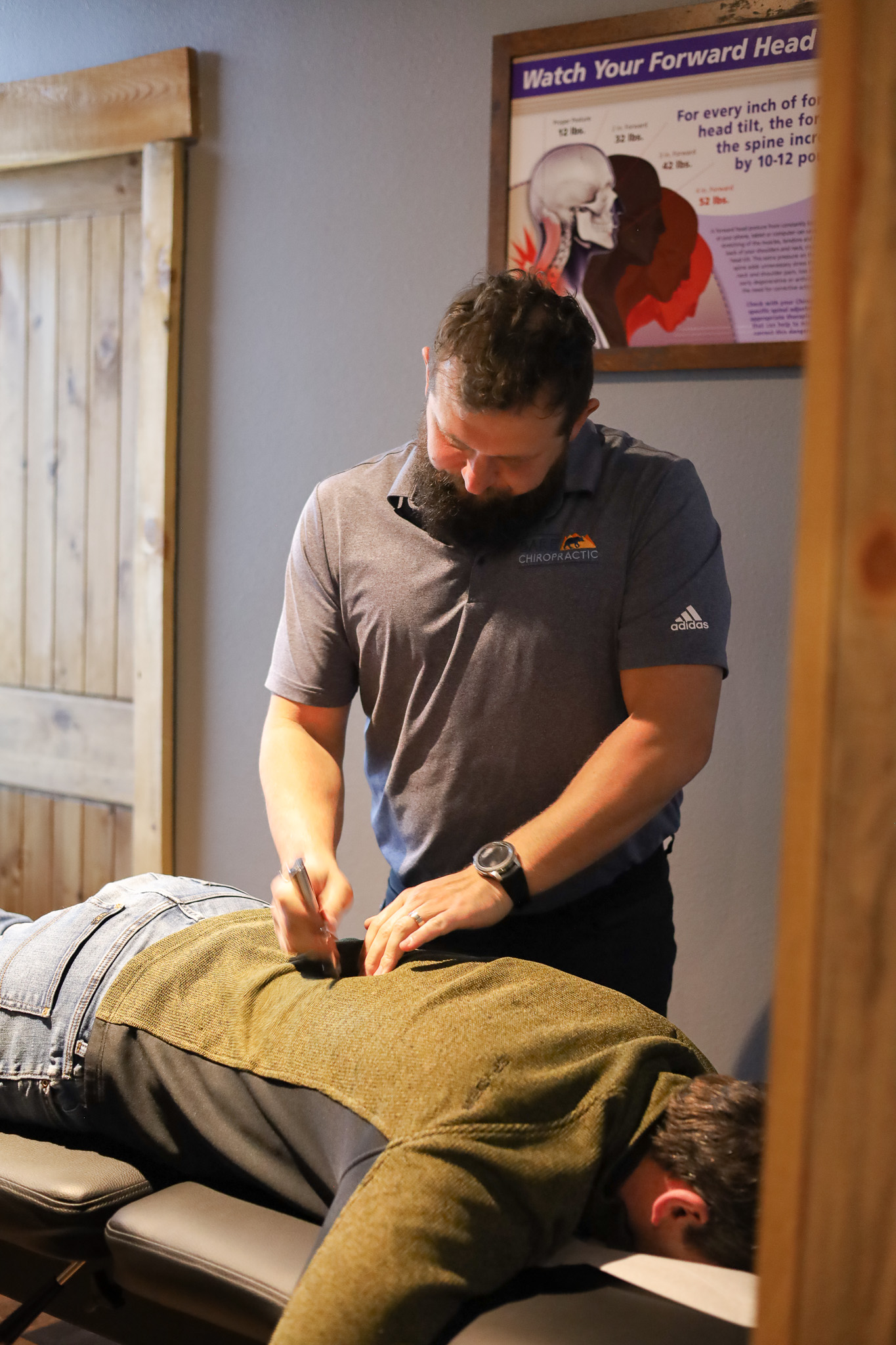
Dr. Thomas Keogh works with individuals experiencing a variety of spinal concerns, including mobility restrictions and postural imbalances. A Billings chiropractic evaluation can help identify areas where spinal function may be contributing to discomfort or movement limitations.
3. Staying Active Is Important
Being in pain may make you want to avoid activity, but movement is an important part of supporting your spinal health and relieving symptoms. Gentle and consistent activity is all you need to maintain flexibility and improve circulation, and you’ll notice that healthy joint motion comes more easily when you move more.
Low-impact activities like walking and stretching are good ways to keep the body moving comfortably. Anything you can do that feels sustainable is a good way to stay active.
You can usually make movement easier by adding in chiropractic adjustments as well. This care can’t reverse any structural changes like foraminal stenosis, but it can help the body move more efficiently and improve spinal mobility. The proper alignment reduces stress on joints and muscles to relieve any pain from the foraminal stenosis.
If you’re ready to start finding relief, contact Bare Chiropractic today for your first appointment!
Sources
Kukurin, G.W. “The amelioration of symptoms in cervical spinal stenosis with spinal cord deformation through specific chiropractic manipulation: a case report with long-term follow-up.” Journal of Manipulative and Physiological Therapeutics, 2004 Jun; 27 (5): e7.
Snow, G.J. “Chiropractic management of a patient with lumbar spinal stenosis.” Journal of Manipulative and Physiological Therapeutics, 2001 May; 24 (4): 300-4.